Iran keeps up unrelenting attacks on ships in the Strait of Hormuz
The rate of attacks so far this month and last month has more than doubled compared with the previous seven months, according to an analysis of data compiled by The New York Times.
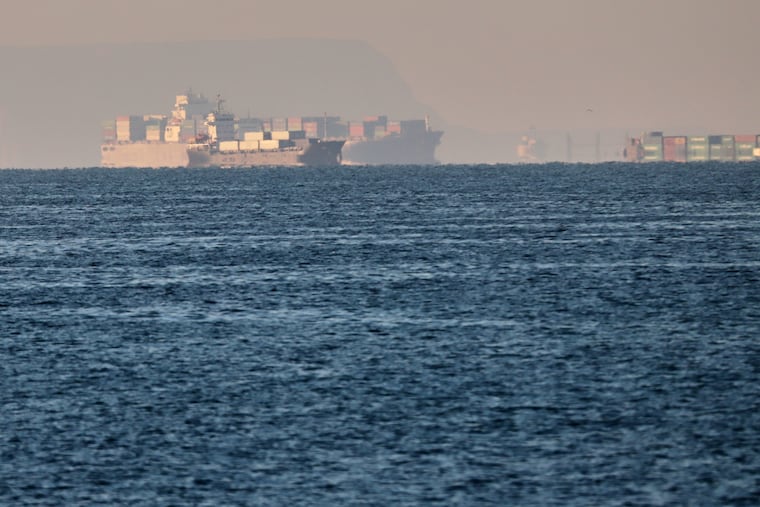
LONDON — Iran has kept up its unrelenting attacks on ships passing through the Strait of Hormuz, including multiple attacks this week on the same tanker that left one sailor missing.
The rate of attacks so far this month and last month has more than doubled compared with the previous seven months, according to an analysis of data compiled by The New York Times.
According to official reports and analysts who track the activity in the region, attacks have averaged roughly one per day in and near the Strait of Hormuz, a critical waterway that had carried one-fifth of the world’s oil and liquefied natural gas shipments before the United States and Israel attacked Iran in February.
But the assault Tuesday on a tanker that had already been disabled late Monday night raised new alarms in the shipping industry.
After the vessel, the Tara Gas, was struck once, Iran issued warnings to salvage tugboats providing assistance, said Dimitris Maniatis, the CEO of Marisks, a maritime risk consultancy. A second attack forced the crew of the Tara Gas to abandon the ship, he said. As of Thursday morning, smoke was still rising from the vessel, satellite images showed.
Throughout the war, Iran has used attacks to try to force shippers to comply with its claim to control navigation in the strait. Most of the strikes have been single hits that often disable vessels. At least 27 seafarers have been killed and 32 injured, according to official tallies and reporting by the Times. At least five sailors are missing.
“The incident may indicate a deliberate effort to extend the effects of an initial attack by discouraging or preventing rescue, recovery and salvage operations,” Maniatis said. Vessels carrying gas or other hazardous material would be particularly vulnerable.
The Tara Gas, which was carrying liquefied petroleum gas, was struck by an unidentified projectile that caused a fire in the engine room. The vessel issued a distress alert, according to several maritime risk firms.
Initial reports indicated that the crew members were safe.
The next day, however, the vessel was attacked a second time, resulting in a fire, according to the U.K. Maritime Trade Operations center, which is run by Britain’s Royal Navy. The explosion could be seen from miles away, and the crew was forced to abandon the ship, with sailors jumping into the water before being rescued by local tradesmen in small boats, according to open-source video that has been verified by maritime experts.
Of the 25 crew members, all of whom were from India, one was reported missing and two were hospitalized with severe burns, according to Manoj Yadav, who leads the union representing Indian sailors.
The rest of the crew members were evacuated to Khasab, Oman, and search-and-rescue operations were continuing, Yadav said.
Sarbananda Sonowal, India’s minister of ports, shipping and waterways, said in a post on social media that the Indian government was coordinating with the ship management company and regional rescue authorities to locate the missing sailor.
About two-thirds of ships that have been attacked since the start of the war in Iran have sustained only minor damage and were able to continue their journeys, according to an analysis of U.K. Maritime Trade Operations center warnings. Most of the rest have been salvaged by vessels that towed them away, though last month two vessels sank. There have been a small number of reported incidents in recent weeks of Iranians targeting salvage vessels.
Martin Kelly, the CEO of Orbital Risk Intelligence, a maritime risk firm, said he believed Iran’s aim was to stop ships from passing through the strait. He did not think their intention was to harm rescuers, but to ensure that ships could not be salvaged. This raises insurance costs and could serve as a deterrent to shipowners.
“The longer the ship is on fire, the higher the cost of salvage,” he said.
Oil shipments through the Strait of Hormuz have picked up considerably since the early months of the war, in large part because the U.S. military has run an extensive operation to shield vessels from Iranian drone and missile attacks. But oil exports through the strait have not fully recovered to prewar levels.
Similarly, global oil prices are higher than they were before the start of the war, though they are down from recent highs. The price of Brent crude, the global benchmark, was around $93 a barrel Thursday — down more than $20 a barrel since late October — as global supply finally caught up with demand. Even as more oil flows from the Middle East, the higher prices have pushed businesses and consumers to find ways to use less fuel.
The United States has carried out intermittent strikes on Iran, including this week, as peace talks have stalled. Iran has attacked fewer ships this month than in October, the most dangerous month since the start of the war, in which more than 38 attacks took place.
Iran’s neighbors in the Persian Gulf also face heightened threats. Kuwait and Bahrain, an island nation in the Persian Gulf, said Wednesday that they had intercepted Iranian aerial attacks. The attack on Kuwait, which Iranian state media said had been aimed at U.S. air defense systems and missile launch platforms, was the first Iranian offensive against the country in about two months. Bahrain, which hosts the U.S. Navy’s 5th Fleet, has reported several attacks since Friday.