How the political left rediscovered religion — and started winning again
The Democrats will triple their number of clergy in Congress next year. To the new arrivals, faith isn’t just a personal matter — it undergirds their demands for a range of policy reforms.

Jonathan Zimmerman teaches history and education at the University of Pennsylvania. He is the author of “Schooling Citizens: How Education Can Save Our Democracy,” which will be published in the spring by the American Philosophical Society Press.
A few years ago, while teaching a class about the Civil Rights Movement, I asked a group of students to identify the Rev. Dr. Martin Luther King Jr.’s profession. Several students said he was a lawyer. And one thought King — given his use of “Dr.” — was a physician.
A few others said, correctly, that he was an “activist” for “social justice.” But that wasn’t his professional vocation.
He was a minister. A man of the cloth. A religious figure.
So were the leaders of every great American campaign for social justice, right up to the Civil Rights Movement itself. Their claims were grounded in the Bible, especially its commands to care for our fellow human beings.
Many of my fellow Democrats seemed to turn away from religion after the 1960s, but they are rediscovering it now. And they are winning.
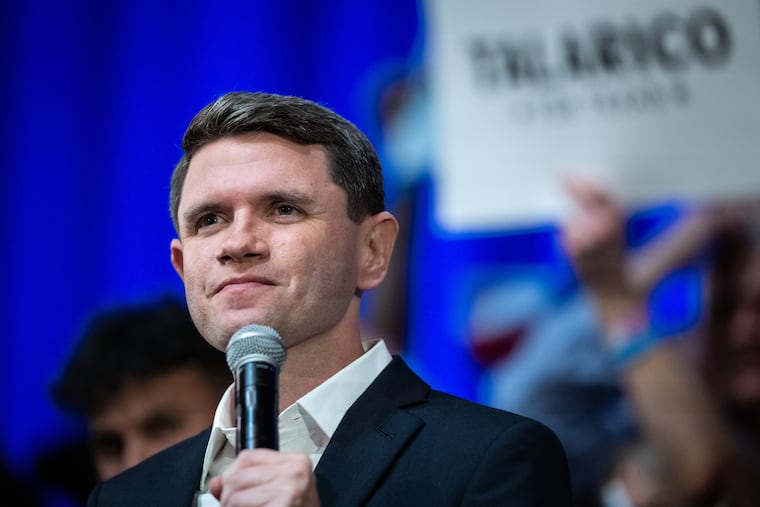
Witness the dramatic Senate victories by Presbyterian seminarian James Talarico and United Methodist pastor Adam Hamilton in the longtime GOP strongholds of Texas and Kansas, respectively. Or the upset win by Lutheran minister Sarah Trone Garriott, who defeated a Republican House incumbent in formerly deep-red Iowa.
All told, the Democrats will triple their number of clergy in Congress next year. The party’s delegation will include at least seven ordained ministers and three others who have attended divinity school or seminary.
To them, faith isn’t just a personal matter. It undergirds their demands for immigration reform, affordable housing, and much else.
In Matthew 25, Talarico told interviewer Ezra Klein back in January, Jesus “tells us exactly how we’re going to be judged and how we’re going to be saved: by feeding the hungry, by healing the sick, by welcoming the stranger, by visiting the prisoner.” Likewise, Hamilton said he based his campaign on the Bible’s golden rule: Do unto others as you would have them do unto you.
Such claims have generated countless think pieces about the “new” Christian left, which is suffusing progressive politics with the spirit of Scripture. But there’s nothing new about it. It’s as old as America.
Start with our first great social justice movement: the effort to end slavery. To abolitionist William Lloyd Garrison, enslaving another human being wasn’t simply “inequitable,” as more secular voices might say today. It was a sin against God, “insulting the majesty of Heaven with the grossest mockery that was ever exhibited to man,” Garrison thundered.
In their quest for freedom, meanwhile, enslaved African Americans cited the Book of Exodus and the Israelites’ liberation from Egypt. So did labor organizers, who likened greedy robber barons to Pharaoh. “What was right in the time of Moses … will be right forever,” the United Mine Workers argued in 1894. “God shall save the children of the needy and shall break into pieces the oppressor.”
At the 1912 convention of the Progressive Party, which endorsed women’s suffrage and a minimum wage, delegates sang “Onward Christian Soldiers.” During the Great Depression of the 1930s, advocates for New Deal social welfare measures quoted Jesus’ injunctions to aid the poor.
And the campaign against racial segregation took root in Black churches, where ministers routinely invoked the Bible. “If we are wrong, God Almighty is wrong,” King intoned during the Montgomery, Ala., bus boycott of 1955.
Eight years later, at the March on Washington, King delivered our most famous civil rights address. His “I Have a Dream” speech was suffused with Scriptural references: righteousness like a mighty stream, the crooked made straight, the glory of the Lord revealed.
By the mid-1970s, however, Democrats started to shun religious rhetoric. A key watershed was Roe v. Wade, the U.S. Supreme Court’s 1973 decision protecting reproductive rights. It galvanized millions of conservative Christians around groups like Moral Majority, which pressed for school prayer and Bible reading alongside bans on abortion.
That made some liberals see religion as a source of bigotry and intolerance. It was a way for right-wing believers to force their own views upon a diverse population.
To his credit, Talarico has condemned recent efforts by conservative Christians to require Bible reading and the posting of the Ten Commandments in Texas public schools. But he did so by invoking Christ himself. “Instead of living out the way of Jesus, we’re imposing our beliefs on other people,” warned Talarico, a former middle school teacher.
To Talarico and the rejuvenated Christian left, living like Jesus means loving their neighbors — including, of course, people on the other side of the political aisle. Too many Democrats have imagined GOP voters as stupid, evil, and racist. That’s not just bad politics; it’s un-Christian, as well.
But that doesn’t mean you simply cede power to them. Jesus preached justice alongside love, speaking up for the impoverished and oppressed. That’s what inspired earlier generations of religious freedom fighters, including Martin Luther King Jr. It’s good to see Democrats reclaiming that tradition, after too many years of wandering in the wilderness.
About our columnists
In contrast to news reporters, who operate within an independent, nonpartisan framework, columnists are charged with including their perspectives, opinions, and viewpoints when presenting their reporting. Inquirer columnists include Jenice Armstrong, Will Bunch, Luis F. Carrasco, Paul Davies, Daniel Pearson, Trudy Rubin, and Sabrina Vourvoulias.